Municipal failures undermine water supply

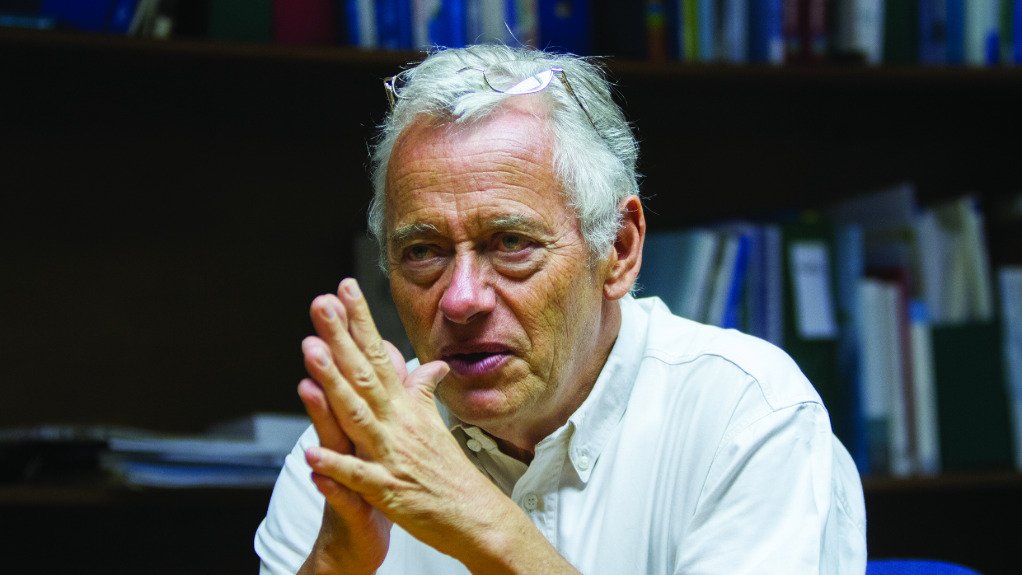
MIKE MULLER eThekwini is still recovering from damage to pipelines and treatment work caused by the 2022 floods which were severe but not unprecedented



South Africa’s extensive water management capabilities continue to underpin the country’s major urban and industrial centres. Large river systems are managed to provide reliable and predictable supplies, despite an arid and erratic climate, says former director-general of the then Department of Water Affairs and Forestry, National Planning Commission commissioner and University of the Witwatersrand (Wits) School of Governance visiting professor Mike Muller.
He notes that major schemes to supply Gauteng and eThekwini continue to be expanded and the public sector continues to develop new infrastructure to support expanding demands, often in partnership with private providers.
“Much of this development work goes unnoticed. A decade ago, the then Department of Water Affairs’ construction team built and commissioned the 80-m-high De Hoop dam, the country’s tenth-largest, to meet the needs of Polokwane and surrounding rural communities as well as the region’s burgeoning platinum and chromium mines.”
Muller adds that many private companies and service providers work at the “cutting edge of water management” in South Africa and internationally. A whole technical ecosystem helps the mining industry and others to comply with pollution control requirements, while the Water Research Commission’s technical programmes produce a steady stream of postgraduate skills.
Yet, despite these capabilities, basic water supply and sanitation services have become increasingly erratic, even in the large cities. The impact of Cape Town’s “Day Zero” crisis between 2017 and 2019 was aggravated by the city’s delays in agreeing to supply infrastructure expansions.
“eThekwini is still recovering from damage to pipelines and treatment work caused by the 2022 floods which were severe but not unprecedented. Their impact was aggravated by poor planning of new urban development and the failure to build and maintain stormwater systems.”
Further, despite good rainfall, all three Gauteng metros face supply restrictions as water demand, driven by excessive losses, exceeds reliable supply. Until the Lesotho Highlands Water Project Phase 2 comes online in a few years, supplies will continue to be constrained. In some smaller cities, towns and rural communities, supplies have collapsed completely.
Meanwhile, failing municipal wastewater collection and treatment is threatening health and polluting rivers and beaches across the country.
Given the Solid Foundations, What Has Gone Wrong?
Explaining why water supply and sanitation services are so problematic, Muller says: “First, we have to recognise that South Africa is a very unequal society. Municipalities have to serve all their citizens and meet their different needs and demands. That’s a complicated business.”
He notes that the municipalities are expected to provide and maintain “world-class services” to rich suburbs and businesses for which they must charge tariffs that cover the costs. However, they also have to ensure that everyone in South Africa’s large poor communities can access affordable basic supplies.
“That means providing free basic minimum supplies for those who cannot afford to pay but also higher service levels for those who can. That’s a big administrative challenge since even those who want more and can pay would prefer to enjoy free services,” Muller ventures.
These challenges are compounded by the requirement to meet South Africa’s relatively high standards for wastewater disposal. Muller cites the Department of Water and Sanitation’s (DWS’s) Green Drop reports, which show that many municipal wastewater treatment plants simply do not work. Even where they are still operating, they are often overloaded and the effluent they discharge does not meet the required standards.
But there is a positive side as “these service failures have opened new opportunities for the private sector”, says Muller. At the moment, many municipalities reject proposals for new housing and commercial developments because there is simply no infrastructure to service them. Companies are therefore offering to build and run decentralised “package plants” for local government.
This important development is supported by the DWS’s revised “compulsory national standards for water and sanitation services” which now allow “package plants” for both water supply and wastewater treatment.
A whole new industry has sprung up to serve this new niche. Providers are not just manufacturing container-sized treatment plants but also helping to manage them. Some companies do this remotely, monitoring performance in real-time and despatching technicians to site when problems occur. Lease arrangements also offer “treatment as a service” options, relieving estate and factory facility managers – and increasingly, municipalities too – from the burden and risks of ownership.
Innovation is also addressing another critical municipal water function: metering and billing water use. This traditionally required teams of meter readers to visit each water user’s premises, find the meter and record its ‘reading’. This often resulted in disputed readings and created opportunities for corruption.
New metering technology allows ‘drive-by’ (or at least ‘walk by’) meter reading. Information is collected electronically, so manual reading errors are avoided and consumption data can be loaded directly into municipal billing systems.
Many other developments are under way. A World Bank-funded programme is helping to upgrade metro water services functions. The wider challenge of poor performing smaller municipalities is being addressed through local government reform processes – an important proposal is to require municipalities to appoint competent service providers.
While these reforms will take time to implement, says Muller, they are also opening the door to new approaches and initiatives in which both the public and private sectors are already beginning to engage.
Article Enquiry
Email Article
Save Article
Feedback
To advertise email advertising@creamermedia.co.za or click here
Research Reports

Projects
Latest Multimedia
Latest News
Showroom
Columbus Stainless, based in Middelburg, Mpumalanga, is Africa’s only producer of stainless steel flat products. In addition, Columbus is the only...
VISIT SHOWROOM
M and J Mining are leading suppliers of physical support systems as used by the underground mining industry. Our selection of products are not...
VISIT SHOWROOM

Announcements
What's On
Subscribe to improve your user experience...
Option 1 (equivalent of R125 a month):
Receive a weekly copy of Creamer Media's Engineering News & Mining Weekly magazine
(print copy for those in South Africa and e-magazine for those outside of South Africa)
Receive daily email newsletters
Access to full search results
Access archive of magazine back copies
Access to Projects in Progress
Access to ONE Research Report of your choice in PDF format
Option 2 (equivalent of R375 a month):
All benefits from Option 1
PLUS
Access to Creamer Media's Research Channel Africa for ALL Research Reports, in PDF format, on various industrial and mining sectors
including Electricity; Water; Energy Transition; Hydrogen; Roads, Rail and Ports; Coal; Gold; Platinum; Battery Metals; etc.
Already a subscriber?
Forgotten your password?
Receive weekly copy of Creamer Media's Engineering News & Mining Weekly magazine (print copy for those in South Africa and e-magazine for those outside of South Africa)
➕
Recieve daily email newsletters
➕
Access to full search results
➕
Access archive of magazine back copies
➕
Access to Projects in Progress
➕
Access to ONE Research Report of your choice in PDF format
RESEARCH CHANNEL AFRICA
R4500 (equivalent of R375 a month)
SUBSCRIBEAll benefits from Option 1
➕
Access to Creamer Media's Research Channel Africa for ALL Research Reports on various industrial and mining sectors, in PDF format, including on:
Electricity
➕
Water
➕
Energy Transition
➕
Hydrogen
➕
Roads, Rail and Ports
➕
Coal
➕
Gold
➕
Platinum
➕
Battery Metals
➕
etc.
Receive all benefits from Option 1 or Option 2 delivered to numerous people at your company
➕
Multiple User names and Passwords for simultaneous log-ins
➕
Intranet integration access to all in your organisation